Service
Water extraction and drying in Bowie, Maryland
Standing water comes out first. Then the building has to give up the moisture it absorbed, and that is slower.
Give your ZIP code and say what happened. Calling soon after you find the water helps.
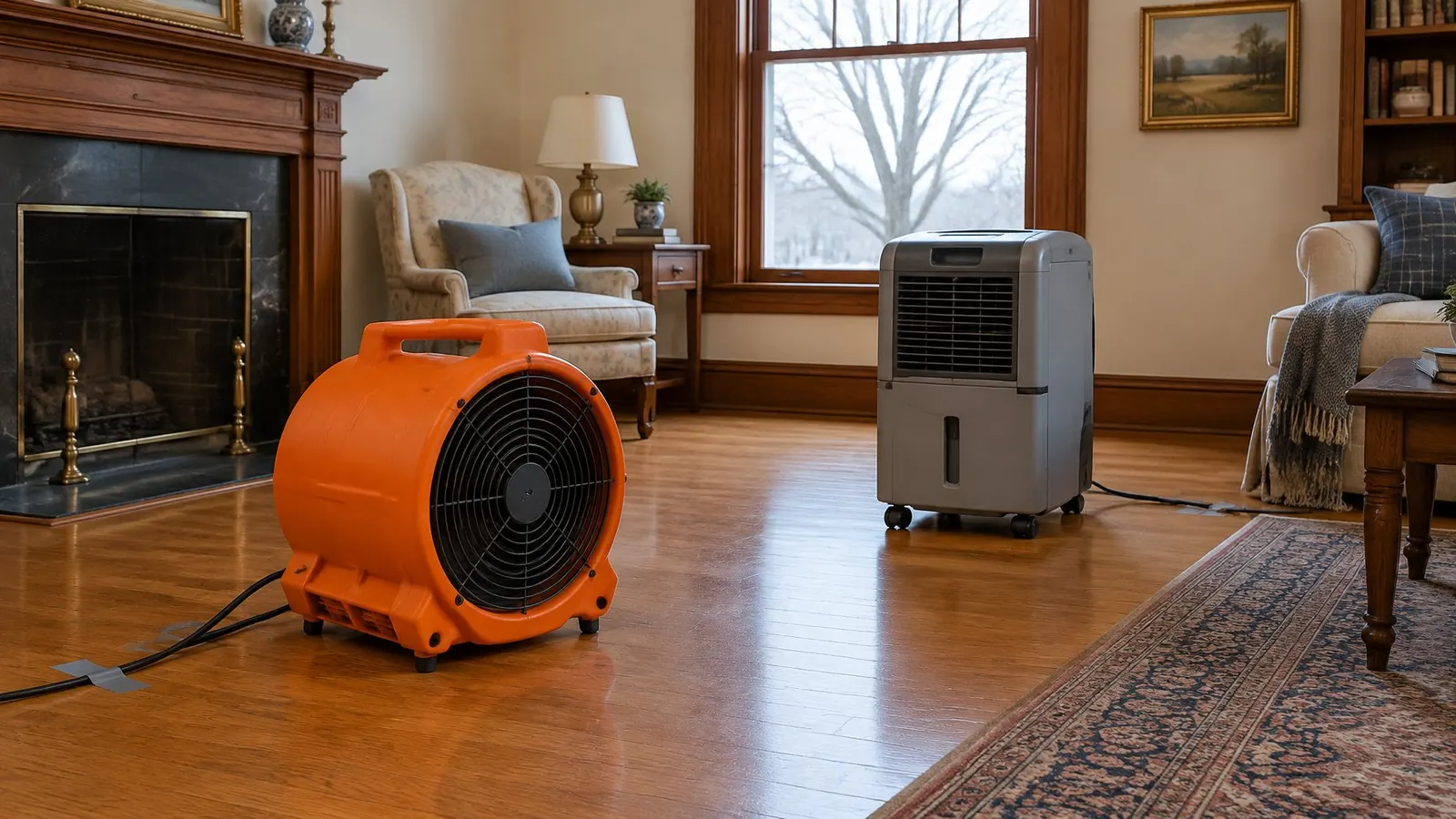
Two jobs, not one
Extraction removes liquid water from carpet, flooring and low spots. It is the visible part of the work.
Drying deals with what you cannot see. Wood framing, subfloor and the back of drywall hold water long after the surface looks fine. Fans move air across wet surfaces, and dehumidifiers pull moisture out of the air so the materials keep releasing it.
EPA's guide says moisture control is the key to mold control and sets the target at 24 to 48 hours for drying water-damaged areas.
How a drying job is run
Map the wet area
A moisture meter is used wall by wall and floor by floor, because water travels past the stain you can see.
Set the equipment
Fans and dehumidifiers go in for the size and layout of the space. Doors and windows are managed so humid air is not simply swapped for more humid air.
Recheck readings
Wet materials are measured again on later visits and compared with an unaffected area of the same material.
Remove the equipment
It leaves only when the readings say the structure is dry, not when the surface feels dry to the hand.
Questions that show how the work will go
Ask how the contractor will decide the job is finished, and what readings it will show you. Ask whether any materials will be removed rather than dried, and why.
Ask who supplies and removes the equipment, and what the agreement says about days on site. Prices depend on the size of the affected area, how many pieces of equipment run, how long they run and whether materials have to come out, so the contractor should be able to say which of those it is basing the figure on.
Water still running or standing?
Call and say where the water is and what caused it. You will be connected with an independent restoration contractor taking calls for your ZIP code.