Service
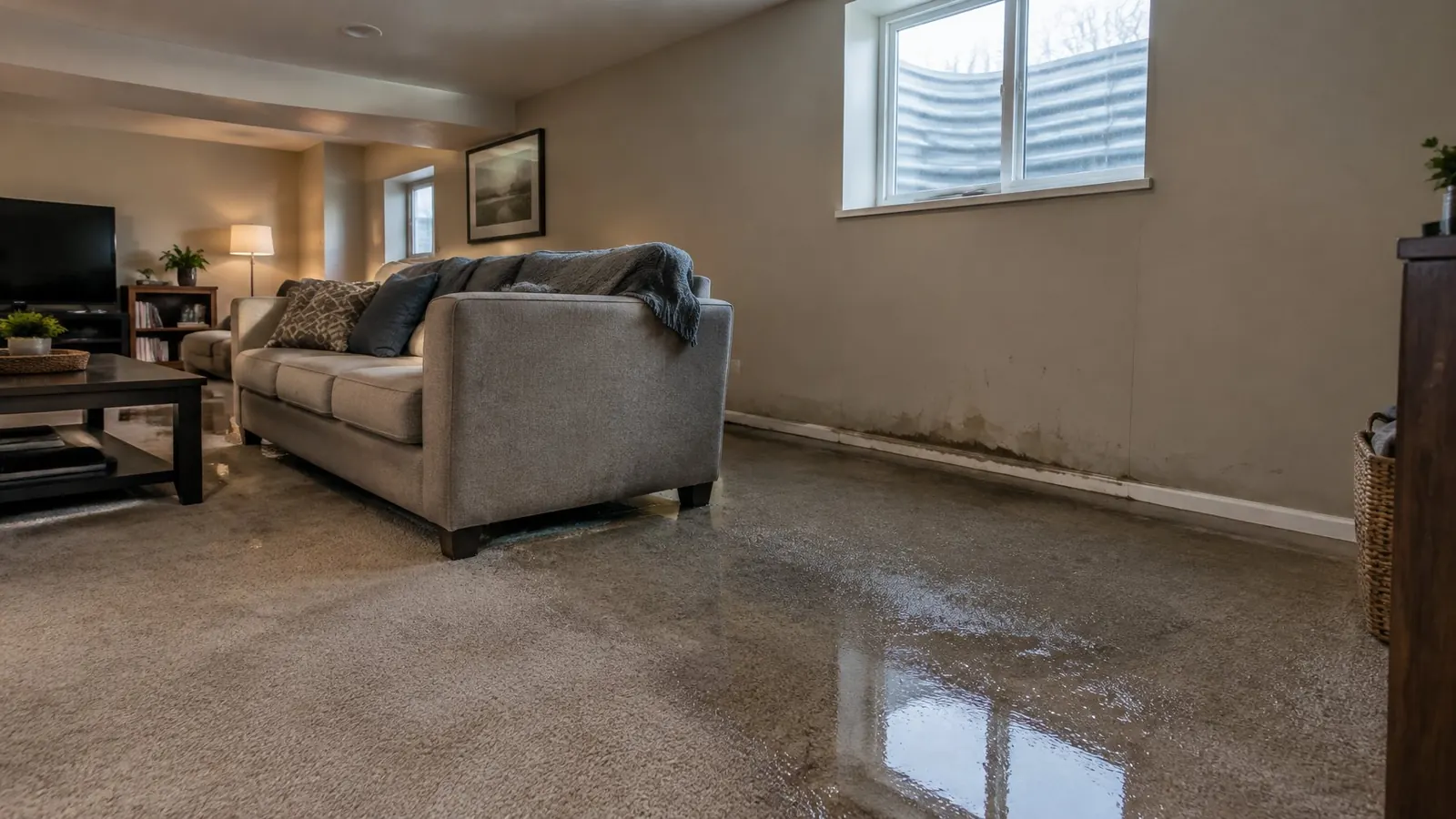
Flooded basement in Bowie, Maryland
Water in a basement can come from above, from a pipe, or up out of the ground. Which one it is changes who you call besides a contractor.
Give your ZIP code and say what happened. Calling soon after you find the water helps.
Stay out of live water
Prince George's County's homeowner guide to drainage problems warns against using electrical appliances in a flooded basement, because even a small amount of standing water can cause electric shock. If the water is near outlets, a panel or a plugged-in appliance, leave it and keep others out until power to that area is off.
Where the water came from
Through a drain or toilet
Sewage backup. It needs its own handling: see the sewage page, and call your utility.
Out of a pipe or tank
A supply line, water heater or washer. Shut the water off at the main and follow the burst pipe or appliance pages.
In from the yard
Heavy rain, a clogged areaway or a failing sump pump. The county has basement guidance, linked on this page.
Up through the floor or walls
Groundwater seepage. Maryland's insurance regulator treats seepage as a maintenance issue that is generally not covered, so read the insurance guide before you assume anything.
What Prince George's County points to
The county's page on water entering a basement is the county's starting point for water in a basement. For drainage on private property or a clogged storm drain in a county road, ask the county.
For city streets in Bowie, the main number for the City of Bowie is 301-262-6200.
Why the basement dries slowly
Concrete block and poured walls hold water, and finished basements add carpet, pad, drywall, insulation and trim to the list. Carpet pad and wet insulation tend to be removed rather than dried. Drywall that stays wet is a common source of the musty smell people notice a week later.
Water still running or standing?
Call and say where the water is and what caused it. You will be connected with an independent restoration contractor taking calls for your ZIP code.